

(Professional) Assessing & Addressing Elopement Behavior: An Affirming Approach for Behavior Analysts
This training provides behavior analysts with a structured, ethical framework for assessing and addressing elopement behavior using a neurodiversity-affirming, skill-based approach.

Paid for by USF Autism Services Fund
We would like to extend our sincere gratitude to the CARD USF Autism Services Fund for their support in making this training possible. Their commitment to expanding access to high-quality resources and services continues to make a meaningful impact for individuals and families.
This training provides behavior analysts with a structured, ethical framework for assessing and addressing elopement behavior using a neurodiversity-affirming, skill-based approach.
Participants will learn how to move beyond oversimplified functional assumptions and instead utilize a two-tiered assessment model that includes an intake screener and a comprehensive, domain-based evaluation. The training emphasizes the ethical responsibility of behavior analysts to assess safety risks, individualize intervention, and prioritize dignity, autonomy, and meaningful skill development.
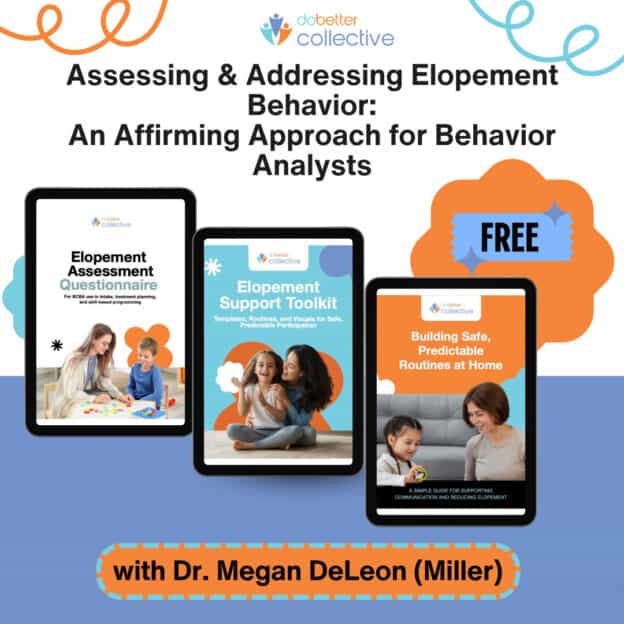
As part of this course, participants will receive practical resources to support implementation, including tools for screening, assessing, and planning intervention for elopement behavior. These resources are designed to help behavior analysts move from assessment to actionable, skill-based programming.
Through applied examples, routine-based intervention strategies, and component–composite analysis, participants will learn how to design proactive supports that reduce risk while promoting communication, regulation, and independence. Ethical considerations related to scope of competence, least restrictive practices, caregiver collaboration, and documentation of risk are integrated throughout the training.
Participants will receive a comprehensive set of practical tools to support implementation, including:
- Elopement Screener
- Elopement Assessment Questionnaire
- Elopement Programming Guide
- Component–Composite Analysis for Elopement Support
- Elopement Case Study and Planning Activity
- Elopement Case Study with Sample Answer Key and Program Examples
- Elopement Support Toolkit
- Elopement Support Packet for Families
- Building Safe, Predictable Routines at Home Guide
LEARNING OBJECTIVES:
By the end of this training, participants will be able to:
- Identify multiple patterns and underlying reasons for elopement behavior beyond single-function explanations
- Use a two-tier assessment model to ethically and systematically evaluate elopement risk and contributing variables
- Develop individualized, skill-based intervention plans that prioritize safety, dignity, and least restrictive alternatives
- Incorporate predictable routines, environmental supports, and communication strategies into intervention planning
- Evaluate intervention decisions in relation to ethical responsibilities, including scope of competence, client safety, and caregiver collaboration
About Instructor

Course Includes
- 3 Lessons
- 1 Quiz
- Course Certificate

Responses